Source Galvanized Wire Mesh Decking for Warehouse, Supermarket, and Industrial Use
Compare 30 listings for galvanized wire mesh decking designed for warehouse racks, supermarkets, and industrial storage. Buyers can evaluate specifications like load capacity, surface treatment, and dimensions to find the right solution for preventing goods from falling.
Key considerations
Products List




Comprehensive Sourcing Guide
Galvanized Wire Mesh Decking Sourcing Guide
Product Scope and Observed Listing Signals
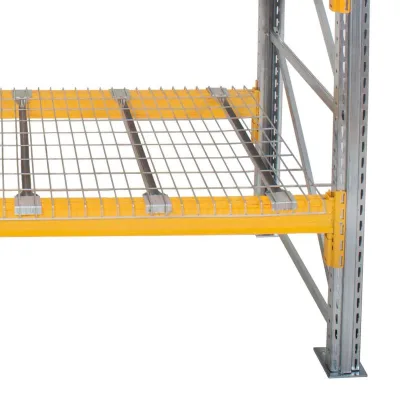
Galvanized wire mesh decking serves as a critical structural component in modern warehouse and industrial storage systems, designed primarily to prevent goods from falling through open racking levels. The product is characterized by a welded wire mesh structure, often reinforced with flared channel or U-shape channel ribs to enhance load-bearing capacity. Buyers will typically encounter these units as flat pallets or layer frames that are either fixed or adjustable, depending on the specific racking configuration required for the facility. The material composition is predominantly steel, treated with either galvanized or powder-coated finishes to resist corrosion and extend service life in demanding environments.
Market listings reveal a wide variance in specifications, indicating that this is a highly customizable product rather than a standardized off-the-shelf item. Observed dimensions range from specific metric sizes like 1130mm x 805mm to imperial equivalents such as 24"x46" and 60"x46", with hole sizes varying between 25mm x 25mm and 50mm x 150mm. The wire diameter typically falls within the 4-5.5mm range, and the number of reinforcing ribs can be adjusted from three to seven based on the intended load capacity. This variability underscores the importance of precise specification matching during the sourcing process to ensure compatibility with existing racking infrastructure.
Technical Specifications to Verify
When evaluating technical parameters, the first priority is verifying the load capacity and structural integrity of the decking. Listings indicate load ratings ranging from 150 kg to 500 kg, but these figures are often contingent on the specific dimensions and rib configuration. Buyers must confirm whether the stated capacity applies to uniform distributed loads or point loads, and verify the type of reinforcement used, such as flared channels or U-shape channels, which significantly impact performance. The mesh hole size is another critical factor; smaller holes like 25mm x 25mm are suitable for small items, while larger openings may require additional support for bulky goods.
Surface treatment and material quality are equally vital for long-term durability. The primary options observed are galvanized and powder-coated finishes, with some suppliers offering zinc-coated variants. Galvanization provides robust corrosion resistance, making it ideal for humid or outdoor-adjacent warehouse environments, while powder coating offers aesthetic flexibility with colors like blue or orange. Buyers should verify the thickness of the coating and the quality of the welding points, as poor welds can lead to structural failure under heavy loads. Additionally, the single package size and gross weight, which can reach up to 20 kg per unit, must be considered for logistics planning and handling equipment requirements.
Compliance and Safety Documentation
Safety and regulatory compliance are non-negotiable aspects of industrial procurement, particularly for products supporting heavy loads. Buyers should request certification documents such as CE and ISO marks, which indicate adherence to European and international quality management standards. Some listings also mention SGS certification, which provides an additional layer of verification for product quality and safety. These certifications are essential for ensuring that the wire mesh decking meets the legal and safety requirements of the destination market, reducing liability risks for the purchasing organization.
Beyond certifications, buyers must verify that the product documentation includes detailed load charts and installation guidelines. The documentation should clearly state the maximum load capacity for each size and configuration, along with any limitations regarding dynamic versus static loads. It is also important to confirm that the surface treatment processes comply with environmental regulations, particularly if the facility is subject to strict emissions or waste disposal laws. Ensuring that the supplier provides comprehensive technical data sheets helps in conducting thorough risk assessments and maintaining a safe working environment.
Cost Drivers and Commercial Terms
The cost of galvanized wire mesh decking is influenced by several key factors, including material prices, surface treatment complexity, and customization requirements. Steel prices fluctuate based on global market conditions, directly impacting the base cost of the product. Customization, such as specific dimensions, hole sizes, or rib configurations, adds to the manufacturing complexity and cost. Buyers should be aware that non-standard sizes or unique load requirements may incur additional tooling or setup fees, which should be clarified during the quotation phase.
Commercial terms and logistics play a significant role in the total cost of ownership. Lead times typically range from 20 to 25 days, depending on the order volume and customization level. Packaging methods, such as banding, plastic film, wood pallets, or cartons, affect shipping efficiency and protection during transit. Buyers should also consider the loading port, which is often Nanjing for suppliers based in Hebei, China, and factor in freight costs and insurance. Minimum order quantities (MOQs) can vary from 1 to 2000 units, so smaller orders may face higher per-unit costs due to production setup expenses.
Supplier Qualification and Quality Control
Selecting a reliable supplier requires a thorough evaluation of their manufacturing capabilities and quality control processes. Buyers should verify the supplier’s production capacity and experience in manufacturing wire mesh decking, particularly for industrial and warehouse applications. It is advisable to request samples to assess the quality of welding, surface treatment, and overall finish. Suppliers who offer customization services and have a track record of meeting specific client requirements are generally more reliable for complex projects.
Quality control measures should be clearly defined and documented. Buyers should inquire about the inspection procedures used during production, including checks for weld strength, dimensional accuracy, and coating uniformity. Third-party inspections can be arranged to verify that the products meet the agreed-upon specifications before shipment. Additionally, suppliers should provide clear information on their return and warranty policies, ensuring that any defective products can be replaced or repaired without significant delay. Establishing a strong relationship with a supplier who prioritizes quality and transparency is crucial for long-term procurement success.
Long-Term Procurement Checks
Long-term procurement success depends on continuous monitoring of product performance and supplier reliability. Buyers should establish a feedback loop with end-users to assess the durability and functionality of the wire mesh decking in real-world conditions. Regular inspections of the installed decking can help identify signs of wear, corrosion, or structural damage early, allowing for timely maintenance or replacement. This proactive approach minimizes downtime and ensures the safety of warehouse operations.
Supplier relationship management is also key to maintaining consistent quality and competitive pricing. Buyers should conduct periodic reviews of supplier performance, including delivery times, product quality, and responsiveness to issues. Building a diversified supplier base can mitigate risks associated with supply chain disruptions. Furthermore, staying informed about industry trends and technological advancements in wire mesh decking can help buyers make informed decisions about upgrades or replacements, ensuring that their storage systems remain efficient and compliant with evolving safety standards.
FAQs
What certifications do galvanized wire mesh decking products have?
These products typically hold CE and ISO certifications, with some listings also showing SGS approval. This ensures compliance with international safety and quality standards for industrial and warehouse applications.
How is the surface treatment applied to the wire mesh?
The surface treatment is applied using either galvanization or powder coating processes to prevent corrosion. Some specific models offer zinc coating as an alternative finish for enhanced durability in various environments.
Which dimensions are available for custom wire mesh decking?
Dimensions are fully customized according to your request, with standard options including 24x46 inches or 60x46 inches. Specific hole sizes like 25mmx25mm or 50mmx100mm are also available to suit different load requirements.
Can the wire mesh decking be customized for specific capacities?
Yes, customization is available to meet specific capacity needs ranging from 150 kg up to 500 kg. The number of reinforcing ribs can also be adjusted between 3 to 7 or based on your specific request.
What is the typical lead time for ordering galvanized wire mesh?
The delivery time is generally between 20 to 25 days after order confirmation. This timeline applies to standard orders shipped from the origin location in Hebei, China, to the loading port in Nanjing.
How is the product packed for shipping and transport?
Products are packed using banding, plastic film, and wood pallets to ensure safe transit. Some items may also be shipped in cartons, with single package sizes varying based on the specific model ordered.